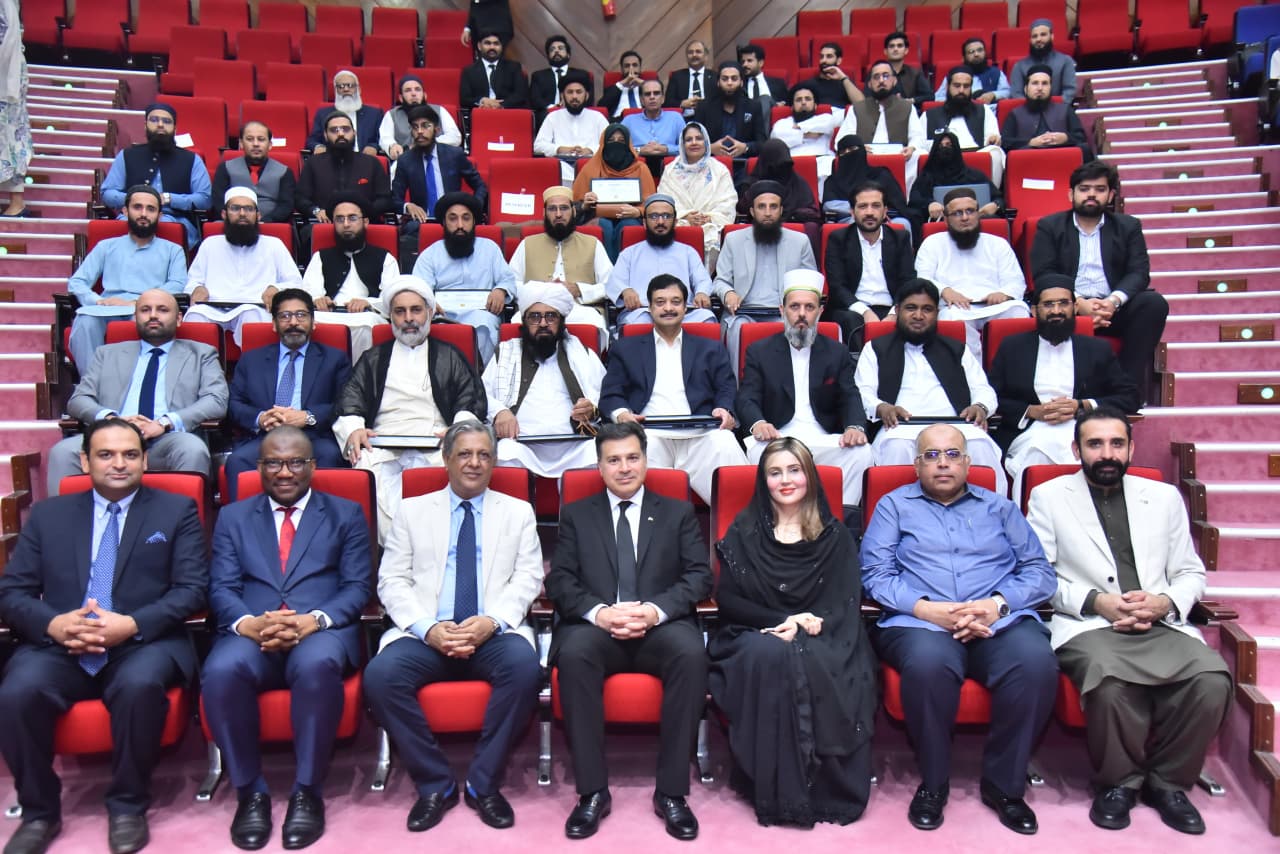
The International Mediation and Arbitration Centre (IMAC), Ministry of Law and Justice, and the OIC Arbitration Centre (OIC-AC) concluded a five-day Civil, Commercial and Shariah-Integrated Mediation Training Programme for Ulema and religious scholars in Islamabad. The programme aimed to strengthen reconciliation, promote Alternative Dispute Resolution (ADR), and equip Ulema and religious leaders with professional mediation skills.
Islamabad, August 24, 2026. Federal Minister for Law and Justice Senator Azam Nazeer Tarar said the government was taking measures to expand effective Alternative Dispute Resolution (ADR) and mediation mechanisms across Pakistan while pursuing judicial reforms to discourage frivolous and baseless litigation.
He was addressing the concluding ceremony of a five-day Civil, Commercial and Shariah-Integrated Mediation Training Programme organised by the International Mediation and Arbitration Centre (IMAC), Ministry of Law and Justice, in collaboration with the OIC Arbitration Centre (OIC-AC), in Islamabad.
The programme was designed specifically for Ulema and religious scholars and brought together civil and commercial mediation, Shariah-based reconciliation, and contemporary dispute-resolution practices within an integrated framework.
Speaking at the ceremony, Senator Azam Nazeer Tarar stressed the need to transform the existing litigation culture and reduce unnecessary and frivolous cases that place additional pressure on the judicial system and national resources. He said the government was pursuing judicial reforms in collaboration with the Law and Justice Commission of Pakistan, the Supreme Court, High Courts and provincial governments.
The Federal Minister reaffirmed the government's commitment to ensuring speedy and inexpensive justice and expanding effective ADR and mediation mechanisms nationwide. He noted that mediation initiatives had already involved lawyers, judges, civil servants, government officials, chambers and civil society, with the current programme further extending the process to Ulema and religious scholars.
He said the programme's integration of Shariah principles and the Islamic concept of reconciliation with civil law and contemporary mediation practices represented an important step in expanding the scope of mediation in Pakistan.
Justice Miangul Hassan Aurangzeb, Judge of the Supreme Court of Pakistan, said litigants should, wherever possible, be encouraged to resolve disputes through mediation instead of approaching courts.
He said cases were already being referred to mediation at the Supreme Court and steps were being taken to further strengthen the court-annexed mediation system. Such centres could provide litigants with a timely and cost-effective avenue for resolving disputes.
Justice Miangul Hassan Aurangzeb said mediators had initially provided their services voluntarily and on a pro bono basis, with several disputes being resolved through mutually agreed settlement agreements that were subsequently placed before the courts.
He said Supreme Court officers had also received mediation training from the Ministry of Law and Justice to enable them to contribute to the process.
Referring to the Dispute Resolution Act 2017, Justice Miangul Hassan Aurangzeb said a legal basis for mediation and ADR already existed, while greater public awareness about the system and its benefits was required. He also stressed the importance of effectively implementing the cost of litigation to discourage unnecessary cases.
He urged Ulema to use their intellectual and social influence to encourage people towards reconciliation and peaceful resolution of disputes within their communities.
Dr. Umar A. Oseni, Secretary General of the OIC Arbitration Centre, said the integration of civil, financial and Shariah-compliant mediation principles into a comprehensive training framework represented an important development.
He said the five-day programme provided the foundation for a distinctive mediation model and expressed the intention to further develop cooperation between the OIC Arbitration Centre and Pakistani institutions at the international level. He noted that the model had generated international interest and could potentially be introduced in other countries.
Ms. Aisha Rasool, Senior Consultant, Ministry of Law and Justice and Project Director, IMAC, said training Ulema in mediation represented an important development for Pakistan's ADR framework.
She said the training would enable Ulema to contribute more effectively to reconciliation and peaceful dispute resolution in seminaries, institutions and communities. She expressed the hope that the model would extend beyond Pakistan and benefit other Muslim countries and communities.
The programme represented a new dimension in Pakistan's ADR efforts by taking mediation beyond courts and legal professionals and placing structured dispute-resolution skills in the hands of trusted community and religious leaders.
The organisers expressed their intention to build on the initiative and explore its replication across OIC Member States and Muslim communities, promoting reconciliation, dialogue and peaceful settlement of disputes.

Copyright @ International Mediation and Arbitration Center. All rights reserved.
Learn more about IMAC's services, training programs, and ADR initiatives. Connect with us for updates, inquiries, and collaboration opportunities in the field of international mediation and arbitration.